

Intro
Losing weight after having a baby can feel overwhelming, especially when your body is still recovering and your daily routine has completely changed. Research and clinical guidance suggest that gradual, realistic lifestyle habits—rather than extreme dieting or intense workouts—may help support healthy postpartum weight loss over time. The focus should be on recovery, consistency, and long-term well-being, not quick fixes.
Understanding Postpartum Weight Loss (Before You Start)
Every woman’s postpartum journey is different. Factors like delivery type, breastfeeding, sleep patterns, and hormonal changes all play a role in how your body responds after childbirth.
Health organizations such as the Mayo Clinic and NIH emphasize that most women need several months for their bodies to recover before pursuing intentional weight loss. Getting medical clearance is especially important if you had a C-section or complications during delivery.
1. Focus on Recovery First, Not Speed
The weeks after childbirth are primarily about healing. Your body has gone through significant physical stress, and pushing too hard too soon may slow recovery.
Instead of chasing fast results, many women benefit from:
- Allowing adequate healing time
- Listening to physical cues like fatigue or discomfort
- Prioritizing gentle movement over intensity
Gradual progress often leads to more sustainable results.
2. Start With Gentle Daily Movement
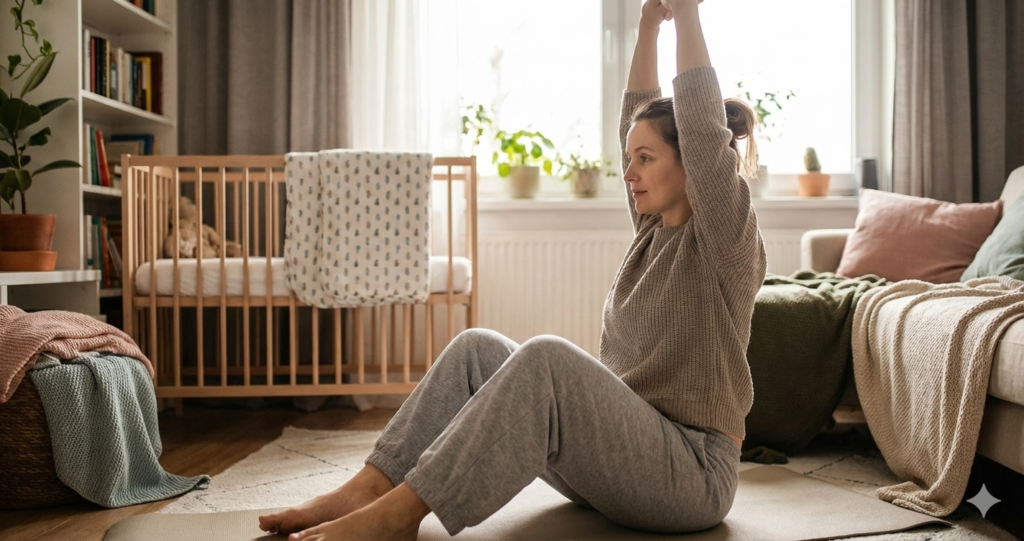
For many new moms, following a short, guided workout can make gentle movement feel more manageable during postpartum recovery. Here’s a beginner-friendly example you can try at home after getting medical clearance.
Starting the day with gentle movement helps boost metabolism after pregnancy.
Light activity can help reintroduce movement without overwhelming your body. Walking, stretching, and mobility exercises are commonly recommended early on.
Many women begin with short walks around the house or neighborhood. As strength improves, some prefer simple home-based routines that fit easily into a busy schedule. Beginner-friendly home workouts are often easier to stay consistent with, especially during the early postpartum phase.
3. Build a Simple, Balanced Eating Pattern
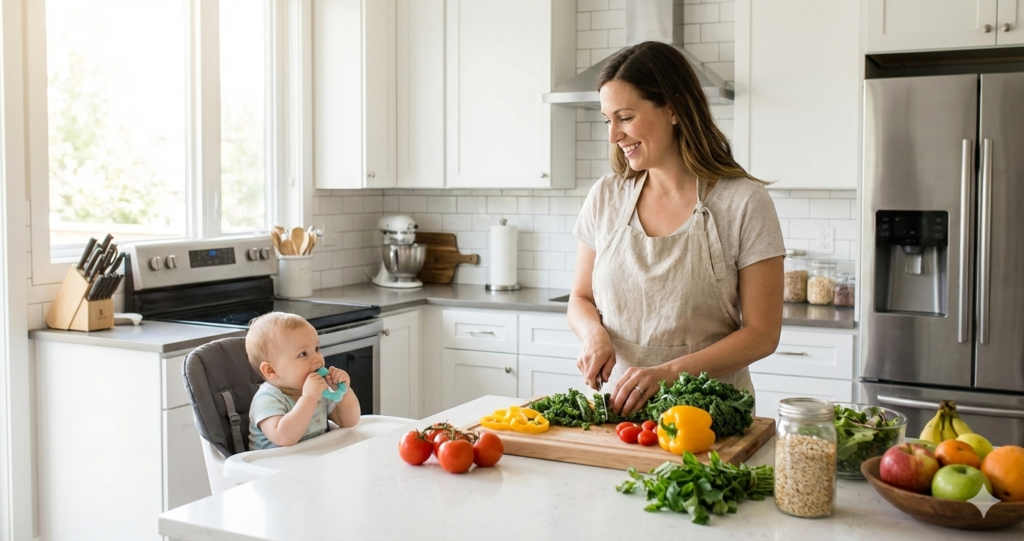
Postpartum nutrition is about nourishment, not restriction. Drastic calorie cutting may affect energy levels and overall recovery.
A balanced approach may include:
- Lean proteins for muscle support
- Whole grains for steady energy
- Fruits and vegetables for vitamins and fiber
- Healthy fats for hormonal balance
Harvard Health notes that balanced meals support both recovery and gradual weight management without extreme dieting.
4. Be Mindful of Portion Sizes
Rather than tracking every calorie, many women find it helpful to become more aware of portion sizes. Eating slowly and recognizing hunger and fullness cues can naturally support healthier intake.
Some people estimate their daily needs using general calorie awareness tools, especially when transitioning back into regular eating patterns after pregnancy.
5. Stay Hydrated Throughout the Day
Hydration plays a role in digestion, energy levels, and appetite regulation. Drinking enough water may help reduce confusion between thirst and hunger.
Keeping a reusable water bottle nearby can make hydration easier during busy days with a newborn.
6. Prioritize Sleep Whenever Possible

Sleep deprivation is one of the biggest challenges new mothers face. Research summarized by Healthline suggests that poor sleep may be associated with weight retention due to its effect on hunger hormones.
While uninterrupted sleep may not always be realistic, small steps can help:
- Resting when the baby sleeps
- Sharing nighttime duties when possible
- Creating a calming bedtime routine
Even modest improvements in sleep quality can make a difference.
7. Manage Stress With Simple Habits
Chronic stress can affect eating patterns and motivation. Gentle stress management strategies may help support both mental and physical well-being.
Helpful options include:
- Deep breathing exercises
- Short outdoor walks
- Light stretching or yoga
- Talking openly with supportive friends or family
The CDC highlights the importance of mental health care during the postpartum period.
8. Ease Into Strength-Based Exercises
Once cleared by a healthcare provider, gradual strength training can help rebuild muscle mass. Muscle tissue supports metabolism and functional strength needed for daily activities like lifting and carrying your baby.
Many women start with bodyweight movements at home before progressing to more structured routines. Consistency matters more than intensity during this phase.
9. Set Realistic Expectations and Timelines
Weight gained during pregnancy does not disappear overnight. Most health experts agree that gradual changes over several months are more realistic and safer than rapid loss.
Comparing your progress to others—especially on social media—can be discouraging. Your timeline is unique, and steady progress is still progress.
10. Stay Consistent, Not Perfect
Perfection isn’t required for results. Missed workouts, tired days, or imperfect meals are part of real life with a newborn.
What matters most is returning to healthy habits without guilt. Consistency over time often leads to better outcomes than extreme short-term efforts.
Wellness Secret Insight
One of the most practical approaches to postpartum weight loss is treating movement and nutrition as supportive habits rather than tasks to “complete.” When routines feel flexible and realistic, they’re easier to maintain during unpredictable days with a baby.
Postpartum-Friendly Habits
| Habit Area | Practical Focus |
|---|---|
| Movement | Walking, light stretching, gentle home workouts |
| Nutrition | Balanced meals, portion awareness |
| Sleep | Rest when possible, short naps |
| Stress | Breathing exercises, light activity |
| Mindset | Progress over perfection |
Frequently Asked Questions
How soon can I start losing weight after having a baby?
Most experts recommend waiting until you receive medical clearance, often around six weeks postpartum, though this may vary.
Is it safe to exercise while breastfeeding?
Light to moderate exercise is generally considered safe for most women, but individual guidance from a healthcare provider is important.
Why is postpartum weight loss slower than expected?
Hormonal changes, sleep deprivation, and recovery needs can all influence how quickly weight changes occur.
Do I need a special diet to lose baby weight?
Extreme diets are not recommended. Balanced eating patterns are often more sustainable and supportive of recovery.
Can home workouts be effective after pregnancy?
Yes, many women find that beginner-friendly home workouts are easier to maintain and fit better into daily routines.
How long does it usually take to lose baby weight?
Timelines vary widely. Many women see gradual changes over several months rather than weeks.
Medical Disclaimer
This article is for informational purposes only and does not provide medical advice. Always consult a qualified healthcare professional before starting any exercise or weight loss program, especially after pregnancy. Individual recovery timelines and health needs vary.